Most people picture bladderworts as weedy little aquatic plants. The epiphytic species are something else: they come from mossy, misty places in South America and throw flowers that look more like orchids than carnivores.
Utricularia asplundii
This bladderwort hails from the cloud forests of Colombia and Ecuador, where it grows on mossy tree branches. It threw a mass bloom for us this winter — that sometimes happens when the season shifts and the light changes.
In cultivation, we've found the key is keeping it constantly wet but never submerged, mimicking that misty, moisture-rich environment. Ours grows better sitting just out of the water than flooded. It was a gift from a friend a few years ago, and it’s one of our favorites.
Utricularia quelchii
Found in the Guyana Highlands of Guyana and Venezuela. A few years ago we made it our mission to figure out U. quelchii, and here's what's worked:
- Flood it. It's an epiphytic Utricularia, but it likes to be flooded — we keep it in swamp-like conditions.
- Media: it grows really well in Fluval Stratum and sphagnum.
- Feed lightly, often. Low doses of fertilizer, frequently.
Set up like that, it's genuinely low effort. Six months into the new setup, it was blooming its head off.
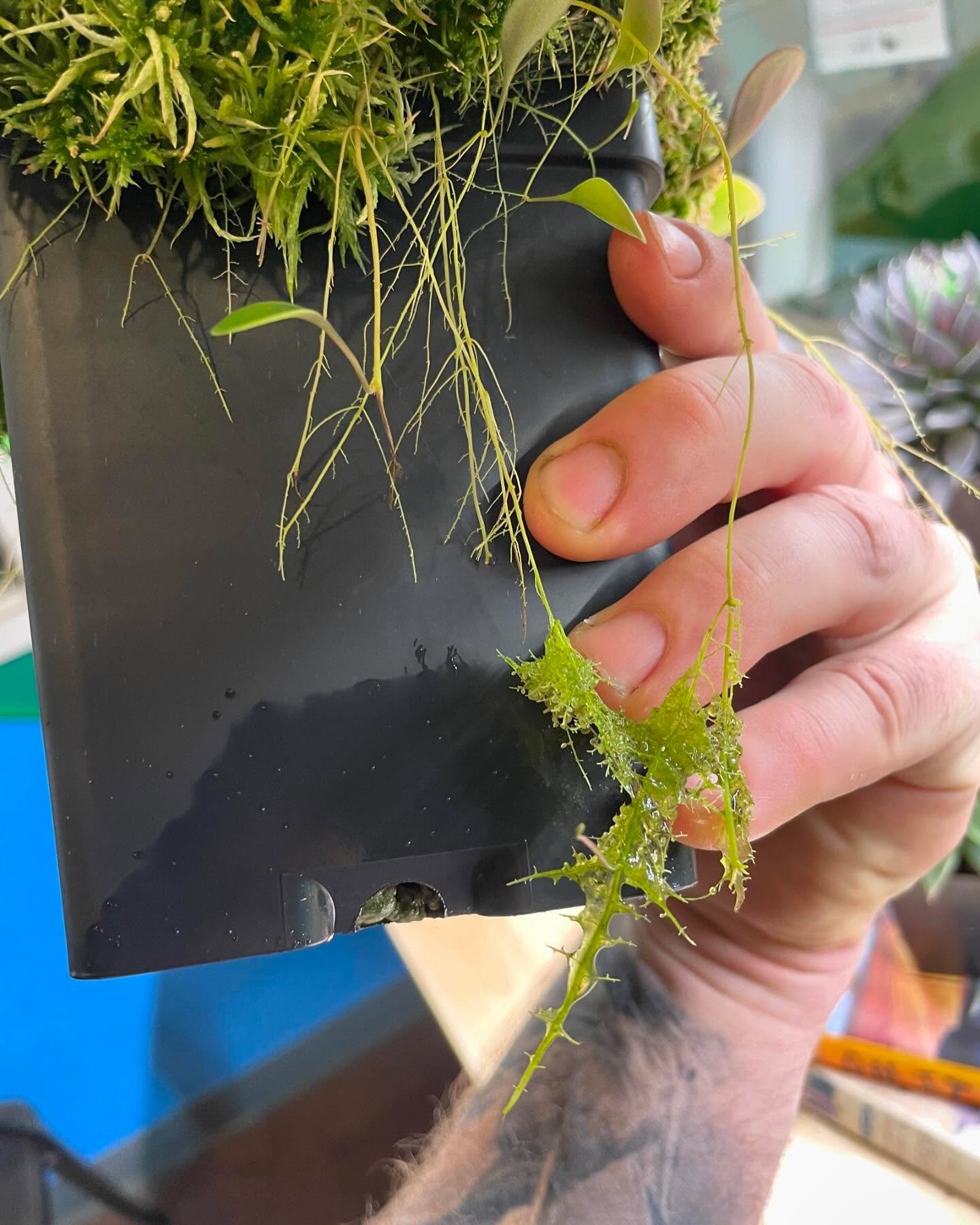
Utricularia campbelliana
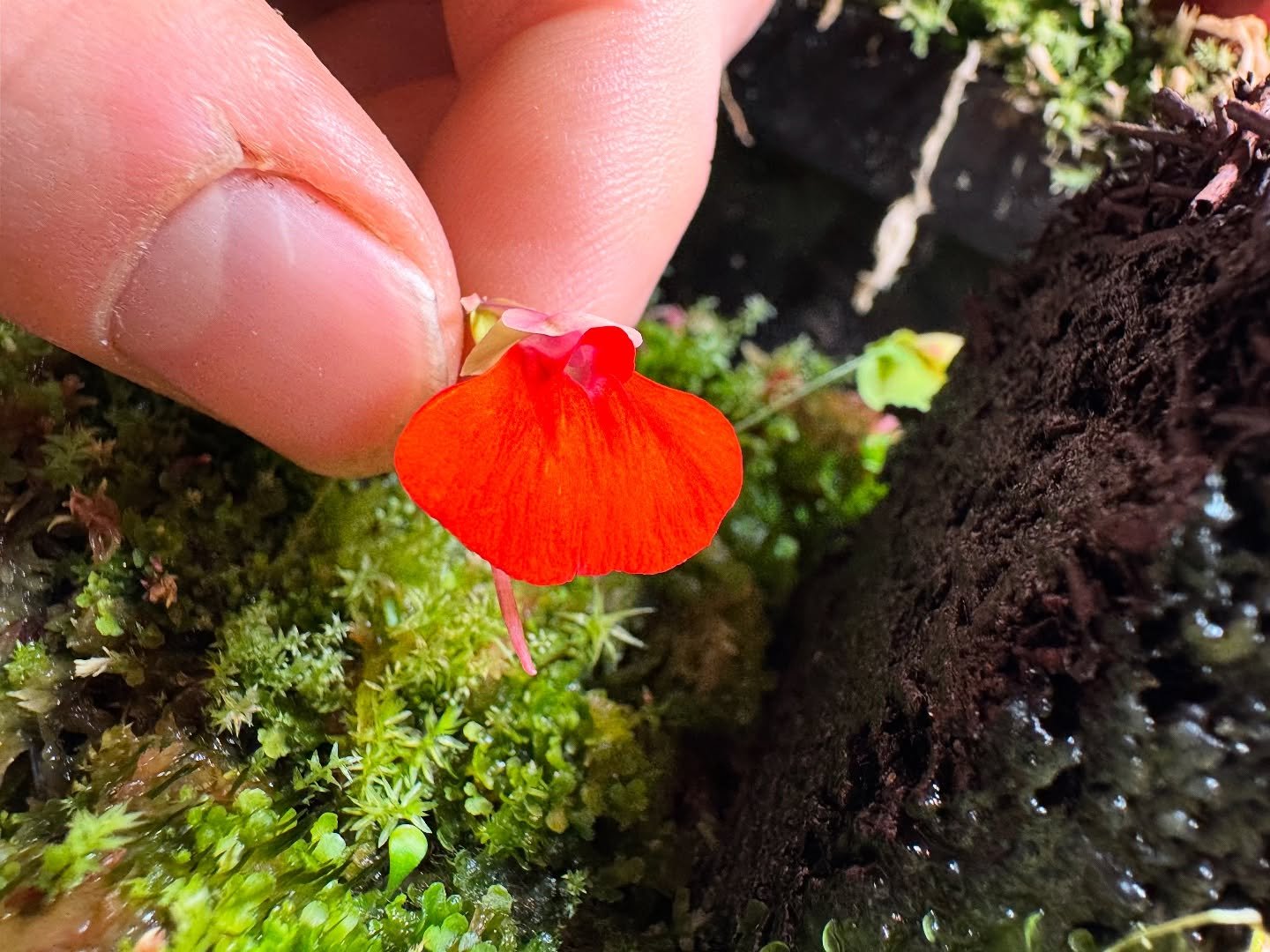
Considered one of the more challenging epiphytic utrics. Ours took about a year and a half to bloom — worth it for that tiny orange-red flower.
See more in our Utricularia collection.