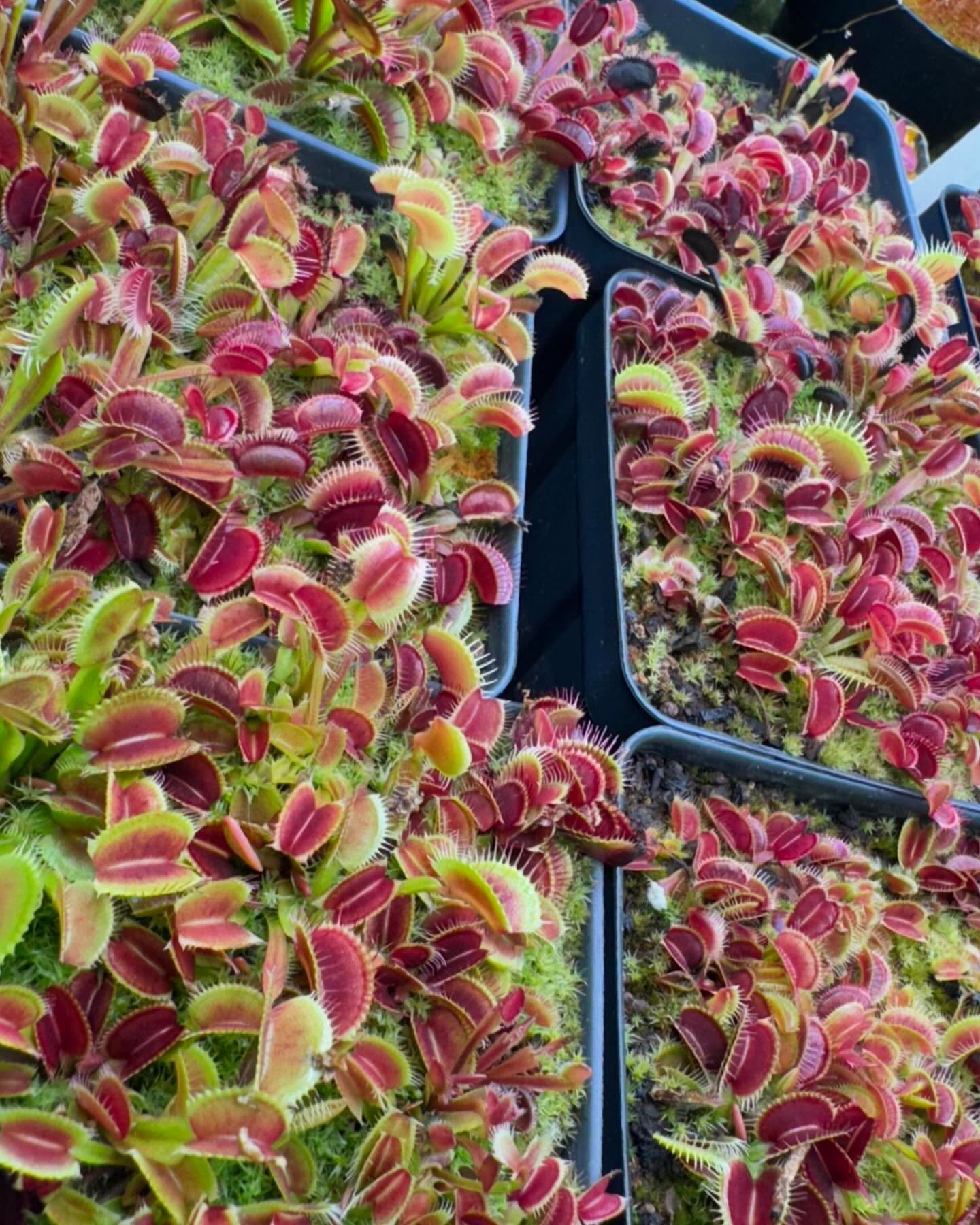
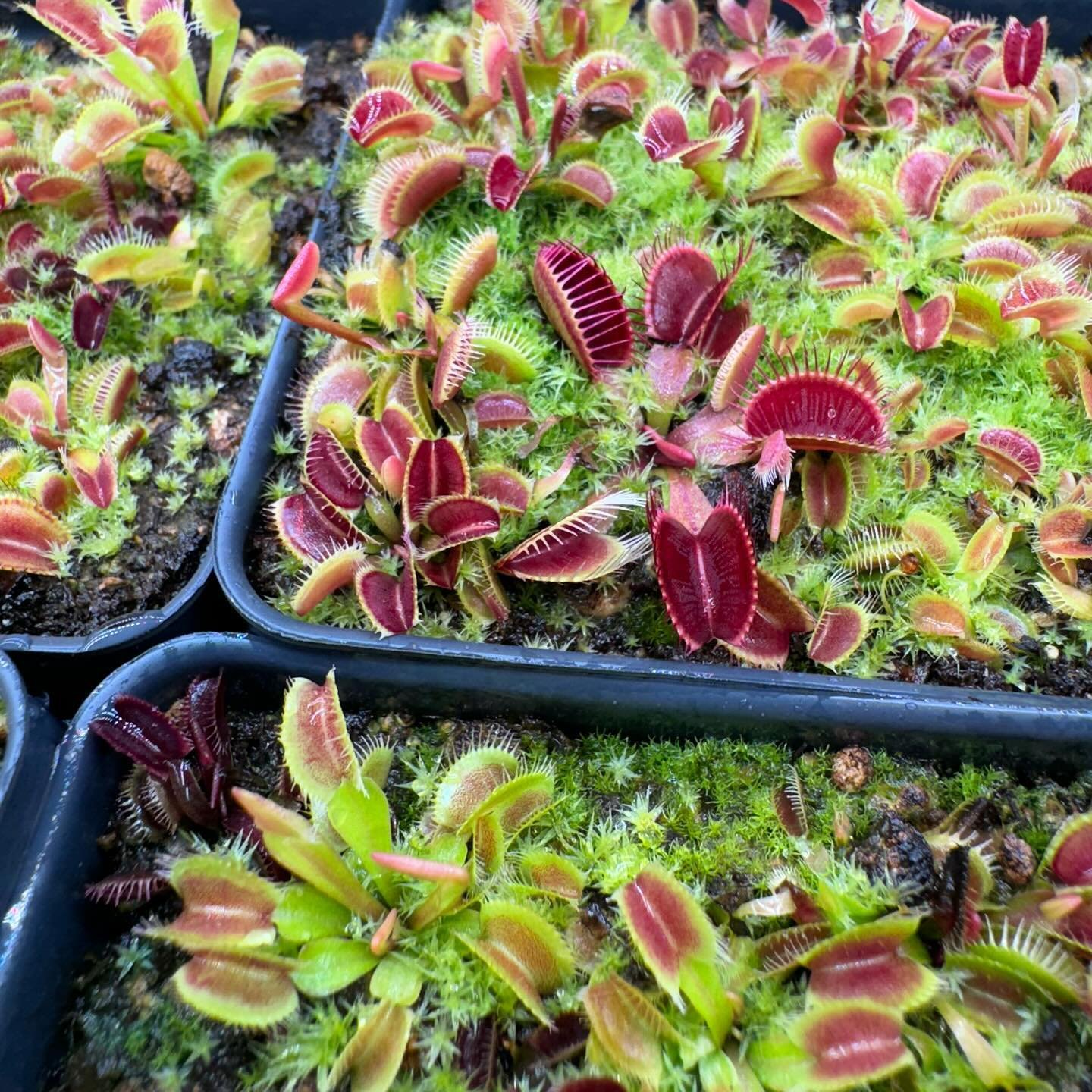
If you've never grown flytraps from seed, try it. It's slow, but nothing beats seeing the variety that comes out of a single pod.
Collecting seed
Flytraps bloom in spring (see the care guide for the trade-off with trap size). Once the flowers are pollinated, wait until the seed pods start to split open on their own. The seeds are tiny and shiny black — we brush them out of the open pods and collect them in a small glass.
Sowing
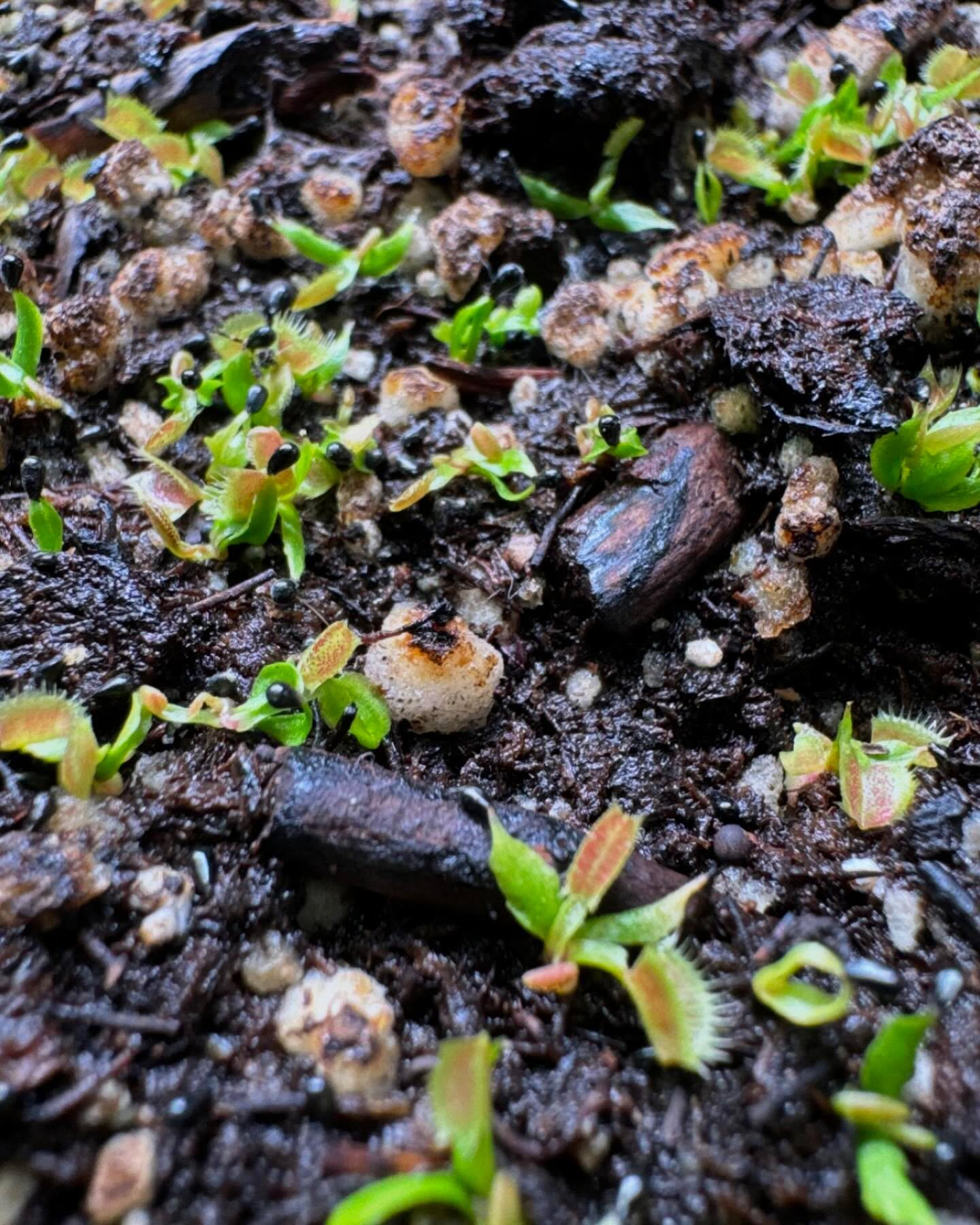
We sow fresh seed straight onto the surface of the mix; we don’t cold-stratify it. The seedlings are almost impossibly small at first — smaller than a single piece of perlite, or the cap of a Sharpie.
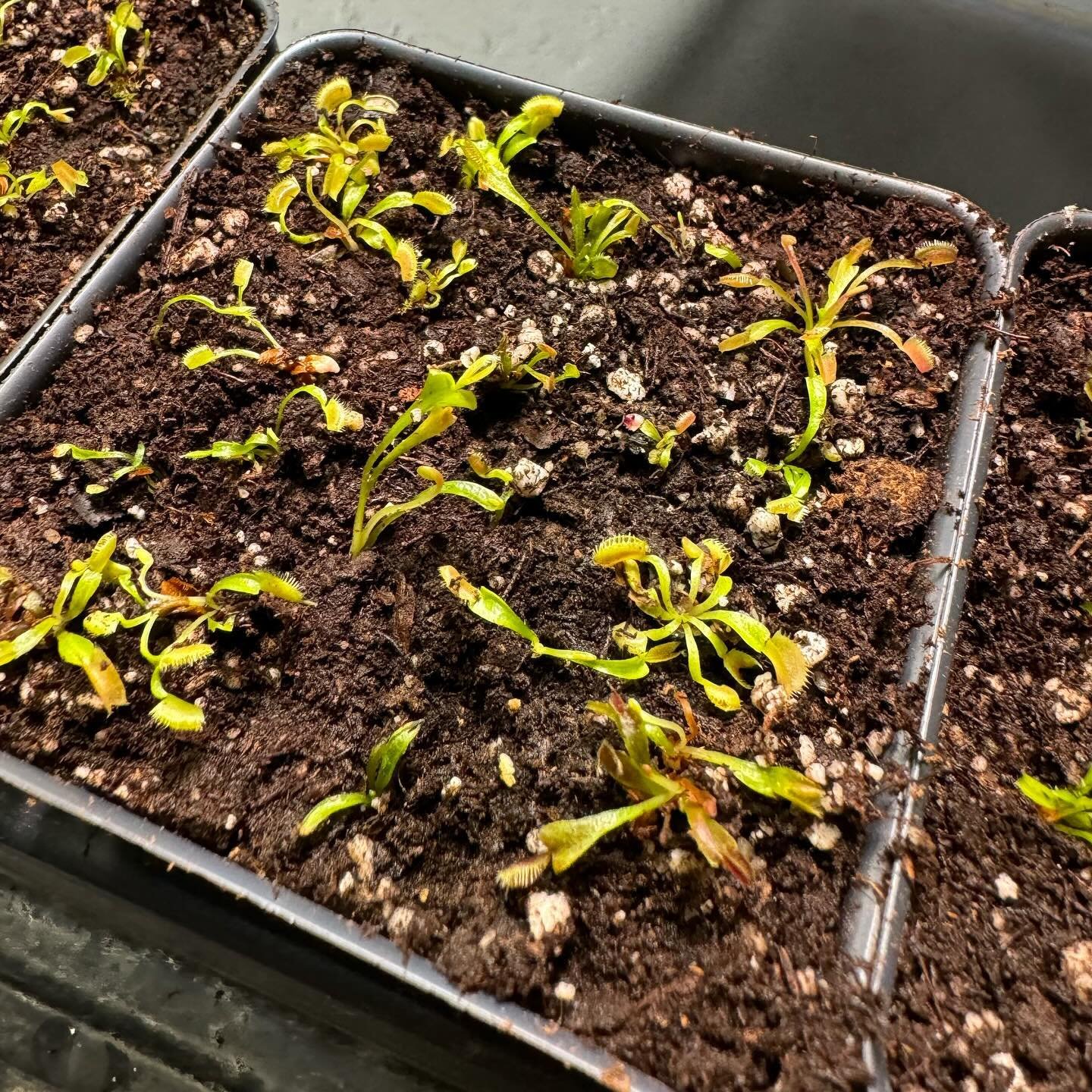
The long middle
We grow seedlings under lights at first, then move them out into full sun. Ours were about a year and a half old before their first time outside. Feeding helped: small portions of bloodworms and a little fertilizer produced some real jumps in trap size.
The other surprise: moss. Nobody tells you you'll be growing moss as well as flytraps — or how tedious it is to pull it out of a seedling pot.
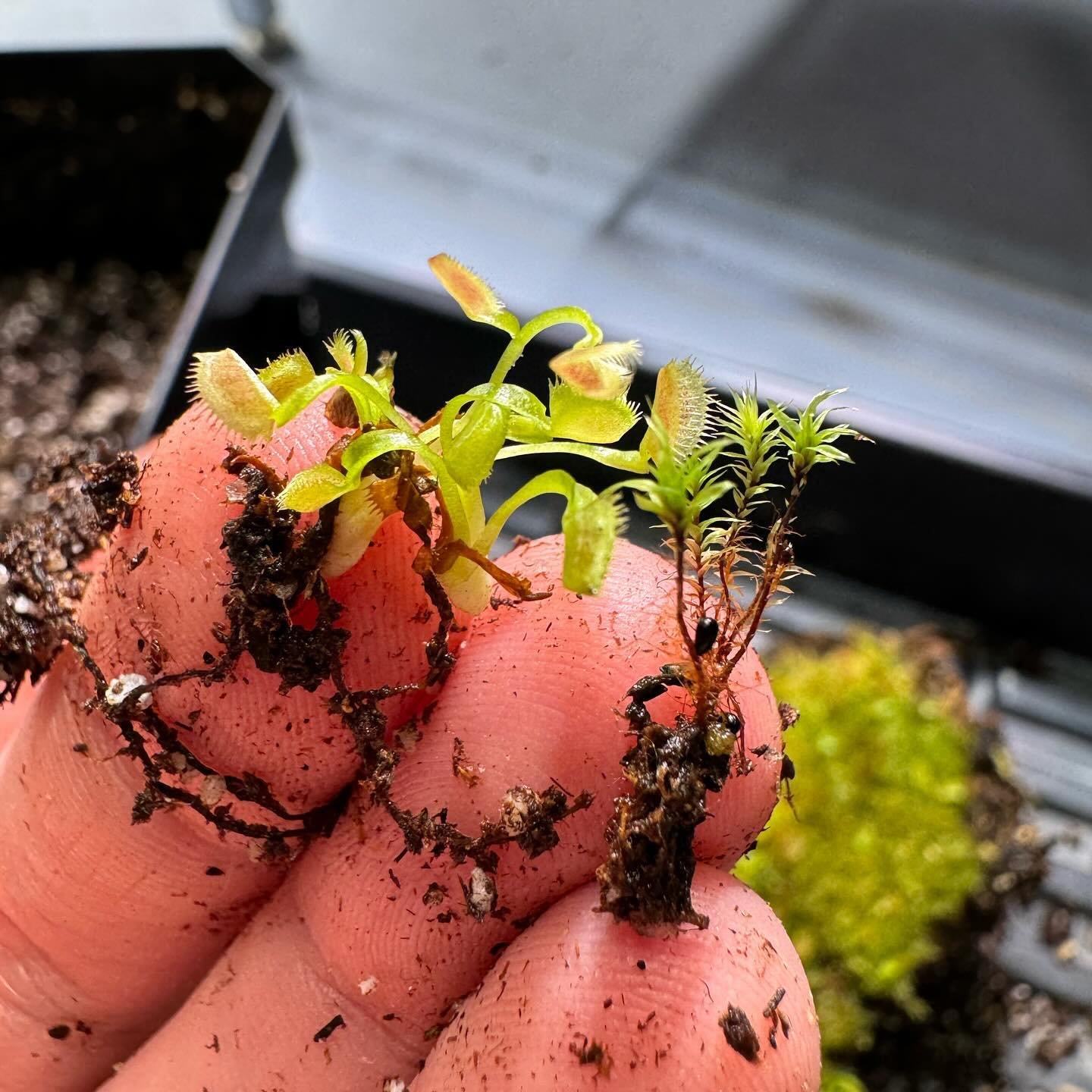
The hardest part
It isn't the waiting, the hand-feeding, or the repotting. It's choosing which ones to keep.
Seed from open-pollinated cultivars gives you a huge range of colors, trap shapes, and teeth. We're just modest flytrap farmers now, admiring the subtle differences.