Heliamphora come from the tepui highlands of Venezuela, Guyana, and Brazil: cool, wet, bright, and nutrient-poor. Replicate that and they're steady growers.
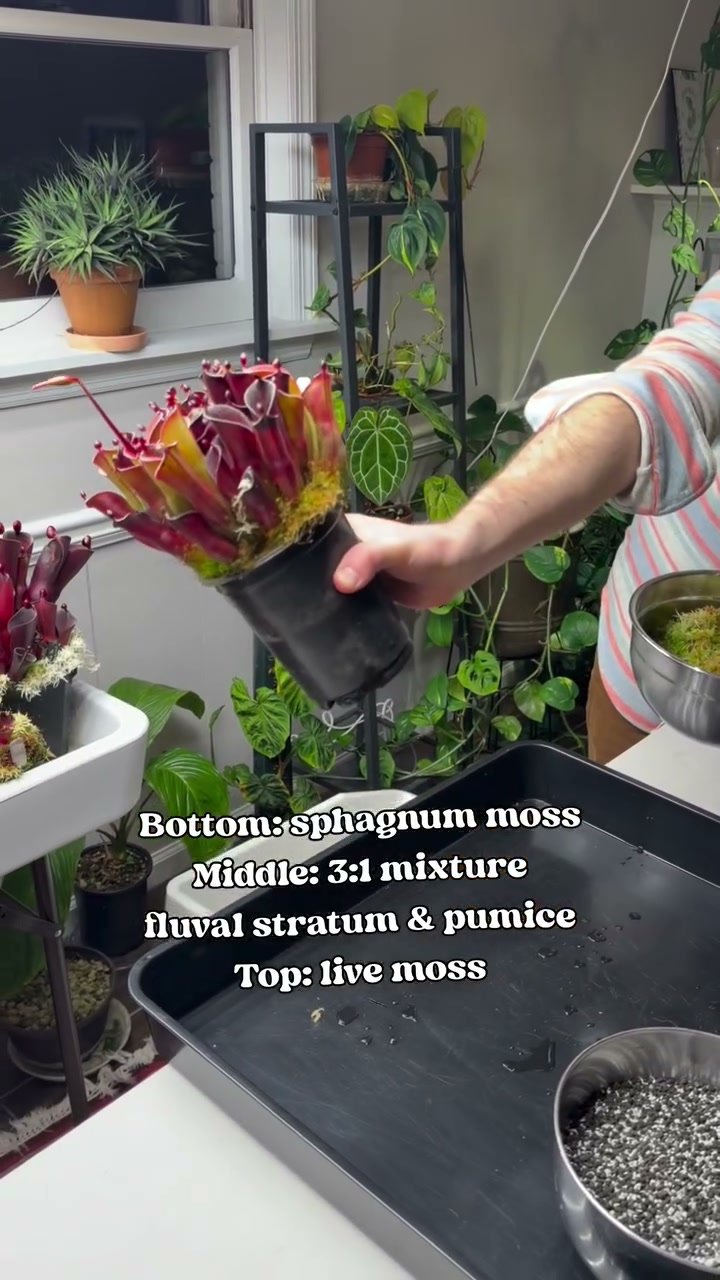
How we grow them here: in a mix of Fluval Stratum (a mineral-rich volcanic aquarium substrate) and pumice, standing in 2–3 inches of water at all times, under bright light in a grow tent.
Light
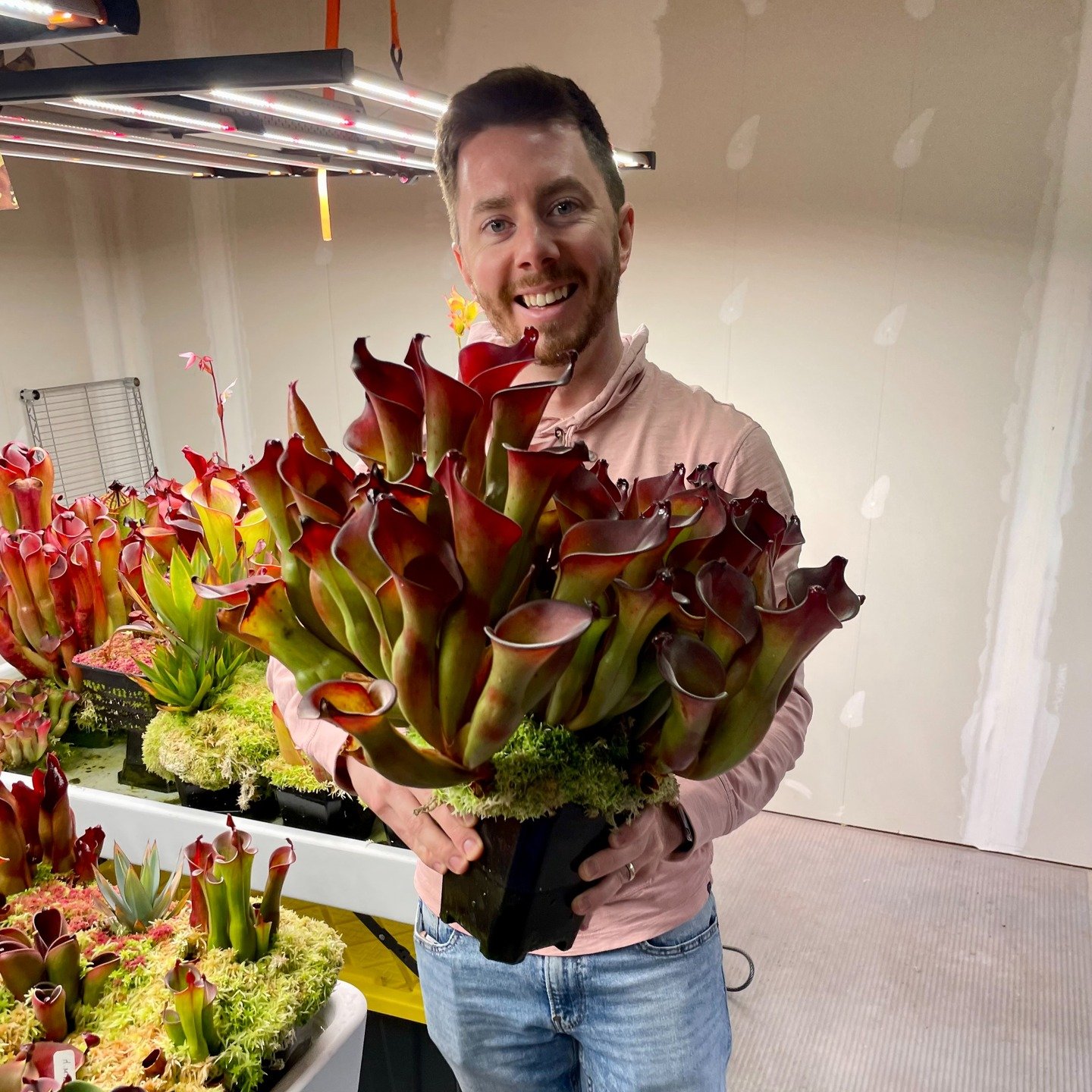
Bright: strong artificial light or very bright shade to some direct sun. Good light keeps growth compact and brings out the red nectar spoons.
Water
Constantly wet. We keep ours standing in 2–3 inches of water because Fluval Stratum wicks it up through the pot without going sour, far lower maintenance than top-watering. Most growers pot Heliamphora in sphagnum, which holds much more moisture; in sphagnum, standing water leads to rot, so top-water and let it drain instead. Pure water only; we use RO (distilled or rain also work).
Temperature
Keep them under 80°F. Sustained heat is the main killer. Days in the 70s°F are ideal. We don't force a nightly temperature drop; nights cool off naturally in winter, and the plants are fine with that.
Humidity
Less than you'd think. We don't run ours humid. They sit at ambient humidity (around 50%) and stay happy as long as they're standing in water.
Feeding
A few small insects, or a very dilute foliar orchid fertilizer misted into the pitchers monthly during active growth.
Divisions
We occasionally have divisions available. Local Georgia growers, get in touch and we'll keep you posted as they establish.